Table of Content
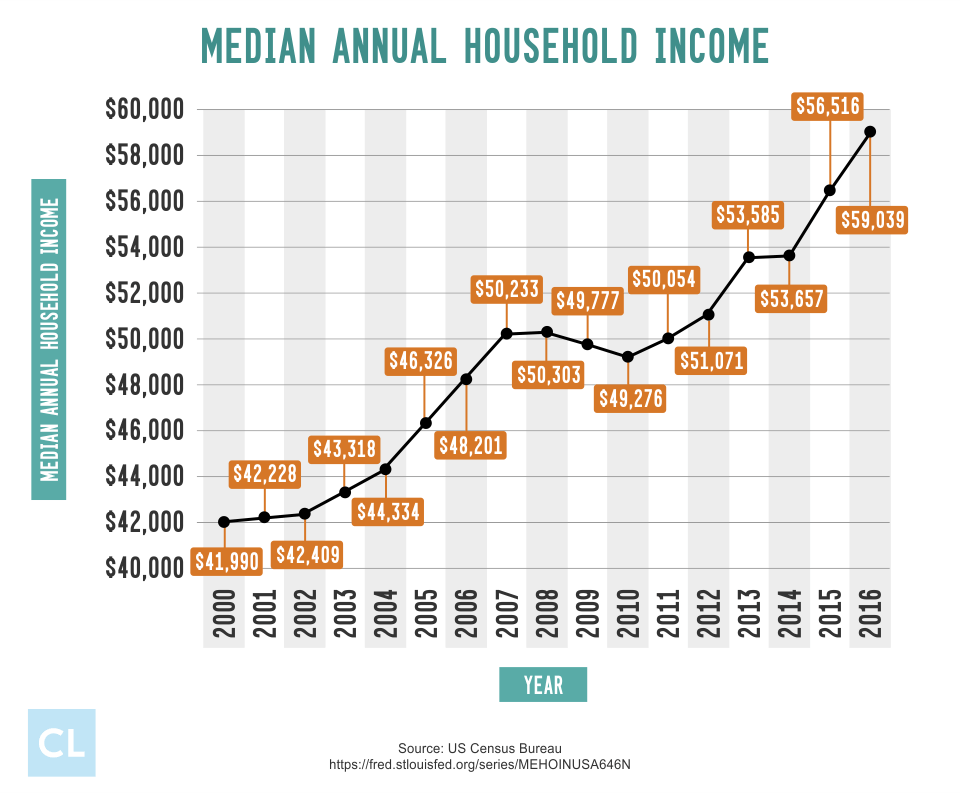
Over that same span of time, median household income has stayed nearly flat, going from $63,902 to $69,178 — a measly 8% increase. That means home prices have increased 3.1x faster than income since 2008. The discrepancy between the growth rates of home prices and household income has been climbing in the Midwest since the 1990s; however, the discrepancy is not as large as it is in other regions. From 2000 to 2017, median home prices showed an increase of 29%, whereas median household income showed a decrease of 1%. Still, the growth rate difference between home prices and household income in 2017 is half of the difference observed for the Southern region and a quarter of the difference observed for the Western region.
By the 2008 housing crisis, average home values had jumped to $304,589 — a 24% increase. In the 10 most expensive cities, the average house-price-to-income ratio leapt to 6.9 in 2021 — a 61% increase since 2000. From 2017 to 2021, home values rose an average of 17.8% — while income increased by just an average 6.2%. In other words, home prices increased 2.8x faster than income on average.
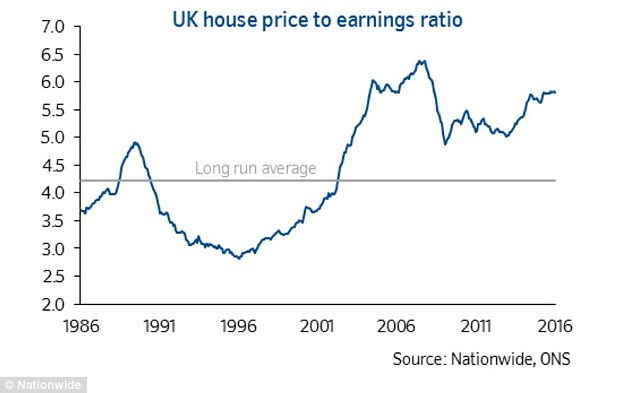
Average House Price to Average Income Ratio (UK)
These values are not much higher than the healthy housing market average of 2.6. In 2000, the growth rate differences between home prices and household income were 17%, 13% and 23% for Charlotte, Columbia and Oklahoma City, respectively. By 2017, however, the same growth rate differences increased to 66%, 56%, and 82%, but household income couldn't keep up, causing these metro areas to be less affordable relative to prior years. The inland metros, Albany and Pittsburgh, are more affordable compared to their coastal counterparts. The price-to-income ratios of these metros were 3.2 and 2.6 in 2017, respectively.
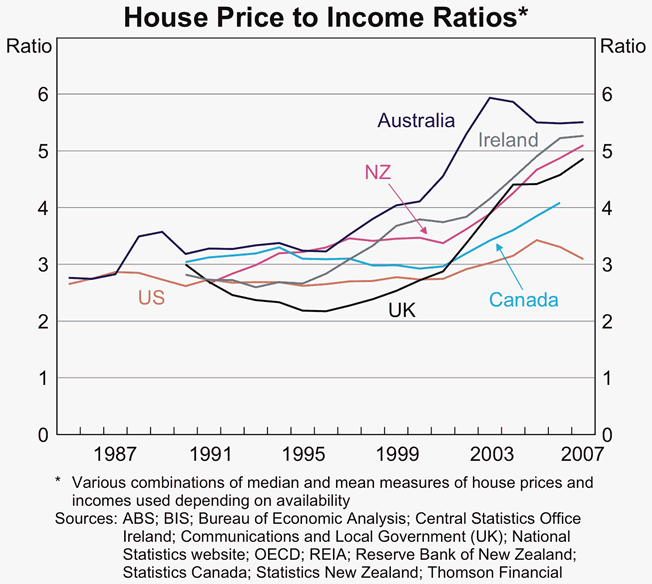
Pundits have blamed lower marriage rates, lifestyle choices , student debt, and the supposed laziness of young people for this decrease, but there’s a much simpler explanation. As high as they are today, price-to-income ratios are still below the all-time highs seen during last decade’s housing boom . In fact, price-to-income ratios nationally were remarkably stable between 1980 and 1999, when they fluctuated between 3.1 and 3.4.
To stay tuned with real estate updates
But in the early 2000s, home price growth far surpassed income growth for six years. As a result, in 2005, the national price-to-income ratio rose to 4.7, the highest it has been since at least 1980. Because of lack of data, we used median family income as a measure of income for 1960 instead of median household income. Median household income increased by 50% since 1960, which is higher than the national average. The gap between household income and home prices was pronounced in the Northeast, but following the 2008 crash, the gap has narrowed as household incomes rise and home prices have dropped throughout the region. Median gross rent increased by 72% since the 1960s, more than twice the growth seen by adjusted incomes, making renting costlier than ever and saving for a future home difficult.
Moreover, the long, secular decline in interest rates that has kept monthly mortgage costs relatively affordable appears to be ending. Consequently, future price increases could lead more directly to increases in mortgage payments. Housing prices include housing rent prices indices, real and nominal house prices indices, and ratios of price to rent and price to income. In most cases, the nominal house price index covers the sales of newly-built and existing dwellings, following the recommendations from the RPPI manual. The real house price index is given by the ratio of the nominal house price index to the consumers’ expenditure deflator in each country from the OECD national accounts database. The price to income ratio is the nominal house price index divided by the nominal disposable income per head and can be considered as a measure of affordability.
Other statistics on the topicGlobal housing market
In 2017, the price-to-income ratio was 5.4 for Seattle and 5.1 for Denver. Whether it's a house with a white picket fence in the suburbs or a high-rise apartment in the heart of a vibrant city, owning property is considered part of the “American Dream” by the vast majority of Americans. However, for many Americans, that dream has become a nightmare because of ever-increasing home prices and stagnant wages. Economists use PTI to describe the relationship of a homeowner’s income to how much of that income they’ll be paying for their home.
Browse through more than 121,000 verified real estate properties with accurate lowdown on amenities, neighborhoods and cities, and genuine pictures. Buying a home is an important investment - turn it into your safest, best deal at PropTiger.com. The concept of price-to-income ratio is used to measure the affordability of homes in a certain area. When banks and financial institutions extent home loans, they consider the price-to-income ratio to assess how affordable it is to the home loan seeker. It is especially used to measure the long-term affordability of homes in a region.
This chart gives a different view of the data from the chart above, comparing the percentage change between UK house prices and average incomes over time. When considering a mortgage application, lenders look at your front-end ratio. Your front-end income ratio measures how much of your gross monthly income would go toward a mortgage payment. Mortgage lenders say that a mortgage payment should not exceed 31percent of an applicant's gross monthly income. To figure your mortgage front-end ratio, multiply your annual salary by 0.31 and divide it by 12 months.
The 2008 financial crash shook up the real estate market, sending home prices crashing, and leaving many unlucky homeowners with underwater mortgages. This is a gauge of how long it will take home buyers to save for a down payment, and whether they’ll be able to afford their monthly mortgage payments. Nationwide rents have increased at twice the rate of household incomes since 1960, making saving for a down payment increasingly difficult.
The good news is that there are still many inland cities where homeownership is affordable. From 1960 to 2000, price-to-income ratios were around 2.6, making homeownership attainable during these years. Home prices jumped during the 2000s and kept steam through the housing crisis. Compared to the Western and Northeastern regions, the South does not show as much of a discrepancy between home prices and household income. By contrast, average home prices in the 10 metros with the lowest house-price-to-income ratio are 2.5x higher than income, up just 10% from the average of 2.3 in 2000. In 2000, the average home value was $271,707 in the 50 most populated cities.
While historically low mortgage rates are translating into big savings for homeowners, those same low monthly payments are masking a troubling trend. While home values have been on the rise for the past year — in some areas appreciating by 15 percent or more annually — median wages haven’t kept pace. However, a worrying trend that emerged over time for the South is that the discrepancy between the growth rates of home prices and household income has been climbing since the 2000s. Since the 1960s, however, the difference between home prices and income has nearly doubled. By 2017, the nationwide price-to-income ratio was 3.6, showing over 3.5 years of household income was necessary to purchase a house. In fact, the nationwide price-to-income ratio hasn't been at a healthy balance since the 1990s.
PropTiger.com is an online real estate advisor that functions on the fundamentals of trust, transparency and expertise. As a digital marketplace with an exhaustive range of property listings, we know it is easy to get lost. At PropTiger.com, we guide home buyers right from the start of their home search to the very end.

One major difference between April 2006 and April 2021 is the level of mortgage interest rates. In 2006 the 30-year fixed rate mortgage rate was 6.5%, more than double the level in April 2021. Lower mortgage rates increase affordability by reducing the payment to income ratio — in 2006, a household spent 25% of their income on a mortgage payment, but in 2021, that ratio dropped to 17%.


No comments:
Post a Comment